
 Michael Caine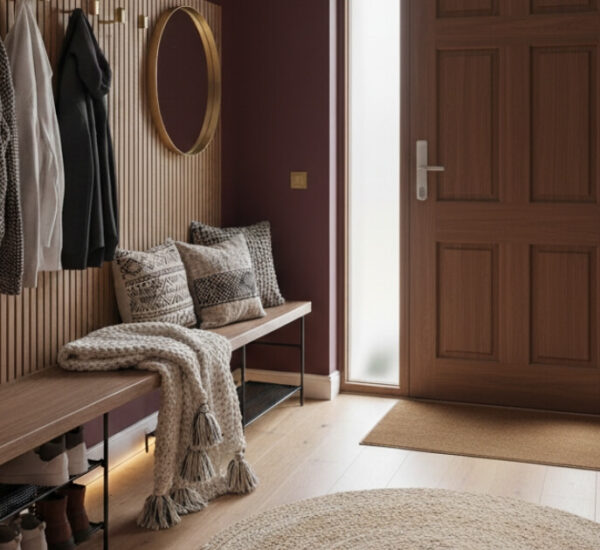
A hallway can make your home feel pulled together before anyone reaches the living room. It is the first quiet signal that your space has taste, care, and a point of view. Smart Hallway Decor Tips do not start with buying more stuff; they start with noticing what the space already does badly. Maybe it feels dim. Maybe it turns into a shoe pile by Tuesday. Maybe it has bare walls that make the whole home feel unfinished.
Most American homes ask a lot from this small stretch of space. It catches coats, backpacks, grocery bags, dog leashes, delivery boxes, and tired footsteps at the end of a long day. That is why hallway style has to work harder than a styled shelf or a guest room corner. A helpful design mindset, supported by resources like home improvement visibility, treats the hallway as a living part of the home rather than leftover square footage. Once you see it that way, the space becomes easier to shape with confidence.
Hallway Decor Tips That Start With Function
Style fails fast when the hallway cannot handle daily life. A pretty runner means little if the entry becomes a traffic jam every morning, and a dramatic mirror loses its charm when backpacks pile beneath it. The best hallway design starts by asking what the space must carry, hide, soften, or guide before it earns one decorative decision.
Entryway styling ideas that solve real problems
Entryway styling ideas should begin at the door, not at the wall. In a suburban Ohio home, for example, the front hallway may need a slim bench for snow boots in winter and soccer cleats in spring. A city apartment in Chicago may need a narrow shelf for keys because there is no mudroom waiting around the corner. The better question is not “What looks good here?” It is “What keeps this spot from becoming a mess by dinner?”
Storage does not need to look heavy. A shallow console, a wall-mounted rack, or a row of handsome hooks can carry the weight of daily use without crowding the walkway. Hooks work better than a closet for families who drop coats fast, because people use what they can see. Design has to be honest about human behavior.
Small trays also matter more than people think. Keys, sunglasses, mail, and earbuds need a landing zone, or they will scatter across the nearest surface. A hallway becomes calmer when the little things have a place to land. That calm is part of the design, even when nobody names it.
Small hallway design that protects movement
Small hallway design depends on clear passage. A hallway is not a room where furniture can float freely; it is a lane. When furniture, baskets, or plants steal too much floor space, the hallway starts to feel tense. You may not notice the tension at first, but your shoulder does every time it brushes the wall.
Slim pieces usually beat deep ones. A console under twelve inches deep, a floating shelf, or a wall pocket can add purpose without blocking movement. In older East Coast homes, where hallways can be narrow and doorways sit close together, every inch matters. A wide cabinet may look great in a store, then feel rude in your actual home.
The counterintuitive move is to leave some wall empty. People often try to decorate every blank patch because emptiness feels unfinished. In a hallway, breathing room is not wasted space. It lets the eye move, and it lets people move too.
Build Visual Rhythm Without Making the Hallway Busy
Once the hallway works, it needs rhythm. Rhythm is what keeps a hallway from feeling like a tunnel or a storage strip. You create it through repetition, contrast, and pauses, not by filling every inch with frames, shelves, and baskets. A hallway should pull you forward while still giving your eye places to rest.
Wall decor for hallways that feels intentional
Wall decor for hallways should have a clear pattern, even when the pieces are personal. A family photo wall can look warm and collected, but only if the spacing behaves. Keep frame finishes related, align at least one edge, and choose a visual centerline that feels steady as someone walks past. Random placement usually reads less “creative” and more “we gave up halfway.”
A long hallway can handle a gallery wall better than a cramped entry, but scale still matters. Use larger frames where the ceiling is high, and avoid tiny pieces that force people to stop and squint. In a Texas ranch home with a long central hall, a row of oversized black-and-white family photos can feel sharp and grounded. In a small apartment corridor, two strong pieces may beat twelve small ones.
Art also does not need to shout. A hallway often works best with pieces that support the mood of nearby rooms. If the living room uses warm woods and soft textiles, the hallway can echo those tones through art, frames, or woven accents. Connection beats novelty here.
Narrow hallway decorating with light and contrast
Narrow hallway decorating often goes wrong when people try to make the space disappear. Painting everything pale may help in some homes, but it can also leave the hallway flat and forgettable. A narrow space can handle character when the contrast is controlled. The trick is to choose one strong move, then let the rest stay quiet.
Lighting can change the whole hallway faster than paint. A flush-mount fixture, a pair of sconces, or even a warm picture light can make a tight passage feel cared for. Many American homes still live with harsh builder-grade hallway lights that flatten every surface. Swap the light, and suddenly the same walls feel warmer.
Mirrors can help, but they are not magic. A mirror that reflects a blank wall doubles the blankness. Place it where it catches light, art, a plant, or a glimpse into another room. Reflection should give the hallway something worth repeating.
Use Materials That Can Take Daily Wear
A hallway gets touched, kicked, bumped, and brushed more than most rooms. That means materials matter. Pretty choices that cannot handle shoes, pets, strollers, grocery bags, and school backpacks will age badly. The goal is not to make the hallway indestructible; the goal is to choose surfaces that gain character instead of showing defeat.
Small hallway design with durable layers
Small hallway design improves when the floor and walls work as a team. A runner can soften sound, add color, and protect flooring, but it needs the right backing and width. A rug that slides underfoot is not charming. It is a future accident wearing a pattern.
Washable runners have earned their place in busy U.S. households, especially where kids and pets pass through the same lane all day. Still, washable does not mean careless. Choose a pattern that hides dust between cleanings, and make sure the color connects with nearby rooms. A hallway rug should feel like a bridge, not a random strip dropped into traffic.
Walls deserve the same realism. Satin or eggshell paint often handles scuffs better than flat paint, especially near entries. In homes where bikes, bags, or dog leashes hit the wall, beadboard or painted trim can protect the lower half while adding character. Practical choices can look rich when they are chosen with care.
Entryway styling ideas for seasonal American homes
Entryway styling ideas need to respect local weather. A Florida hallway does not face the same problems as a Minnesota one, and a Phoenix entry has different needs from a Boston brownstone. Good design pays attention to climate without turning the hallway into a storage closet.
Cold-weather homes need a place for wet boots, damp coats, and road salt. A tray under the bench, a washable mat, and closed baskets can keep winter from spreading across the floor. Warm-weather homes may need space for sandals, sunscreen, dog gear, and tote bags instead. The objects change, but the principle stays the same: name the mess before it takes over.
Seasonal decor should stay light in a hallway. A small wreath, a bowl with natural texture, or a single vase can shift the mood without clogging the space. The hallway is not the place for a full holiday display that everyone has to dodge. Let the season pass through, not camp there.
Finish With Personality, Not Clutter
The final layer is personality, and it is the easiest one to overdo. People often confuse personal style with more objects. A hallway usually needs fewer things with stronger meaning. The best finishing touches tell visitors something about the home while still letting the space do its job.
Wall decor for hallways with personal restraint
Wall decor for hallways can carry memory without becoming a scrapbook. One framed map from a favorite road trip, a small set of vintage prints, or a single piece made by a child can say more than a crowded wall of unrelated moments. Restraint does not make a home cold. It gives the meaningful pieces room to speak.
Personal items look better when they share a frame language. They do not need to match, but they should feel like they belong to the same conversation. Brass, black, oak, walnut, and painted white frames can all work, but mixing every finish in one hallway often creates noise. Pick a lane, then allow small variation.
A hallway also offers a smart place for quiet surprises. A tiny ceramic dish from a local craft fair, a painted stool from a flea market, or a framed postcard from a national park can make the space feel lived in. The charm comes from specificity. Generic decor has no memory attached to it.
Narrow hallway decorating through scent, sound, and softness
Narrow hallway decorating is not only visual. A hallway has sound, temperature, texture, and even scent. Hard floors and bare walls can make footsteps sharp, especially in townhomes and older houses with long corridors. A runner, fabric wall hanging, or small upholstered bench can soften the experience without adding bulk.
Scent should stay subtle. A hallway is a passing space, so heavy fragrance can feel pushy. A clean reed diffuser, fresh greenery, or cedar near a coat area can make the entry feel cared for without turning it into a perfume counter. The best scent is the one guests notice only after they already feel welcome.
The last layer should invite use, not fear. A hallway that looks too precious makes people nervous. A stylish home still needs room for real life, and the hallway proves whether that balance is working. Choose one thing to improve this week: the light, the landing zone, the runner, or the wall. Hallway Decor Tips matter most when they turn a forgotten passage into a space that quietly supports the way you live.
Conclusion
A hallway is never only a hallway. It is the handoff between the outside world and your private life, and it shapes the mood of your home more often than people admit. When the space feels neglected, the whole house can feel slightly unfinished. When it feels considered, even a simple floor plan gains polish.
The strongest Hallway Decor Tips do not ask you to decorate harder. They ask you to choose better. Give daily objects a home, protect the path people use, add light where the space feels dull, and let personal details arrive with restraint. That order matters because beauty lasts longer when the room works first.
Start with the one hallway problem you notice every day and fix that before buying another decorative piece. A home becomes more stylish when its smallest spaces stop apologizing and start doing their job with grace.
Frequently Asked Questions
What are the best hallway decor ideas for a small home?
Choose slim storage, warm lighting, and one strong wall feature instead of many small pieces. A narrow runner, wall hooks, and a mirror placed across from light can make the space feel useful and styled without crowding the walkway.
How can I make a narrow hallway look wider?
Keep the floor path clear, use consistent paint tones, and add lighting that spreads evenly across the walls. A mirror can help when it reflects something attractive, but empty space and smart scale often do more than reflective glass.
What color works best for hallway walls?
Soft whites, warm neutrals, muted greens, and gentle taupes work well in many American homes. The right choice depends on nearby rooms and natural light. Hallways with little daylight often look better with warmth than with cold bright white.
How do I decorate a hallway without using too much furniture?
Use the walls. Floating shelves, hooks, art, sconces, and shallow ledges add style without stealing floor space. Keep furniture limited to one useful piece, such as a slim bench or console, when the hallway width allows it.
What kind of rug is best for a hallway?
A low-pile runner with a secure rug pad works best because it handles foot traffic and reduces slipping. Choose a pattern that hides dirt between cleanings, especially near front doors, garages, mudrooms, or busy family entries.
How can hallway lighting make my home feel more stylish?
Better lighting adds warmth, depth, and intention. Replace harsh overhead bulbs with warmer tones, add sconces where possible, or use a picture light above art. A hallway feels finished when the lighting flatters the space instead of flattening it.
What should I put on a long hallway wall?
Use a steady visual rhythm, such as a gallery row, oversized art, framed textiles, or a series of family photos. Keep spacing consistent and avoid tiny pieces that get lost. Long walls need confidence more than clutter.
How do I keep hallway decor practical for kids and pets?
Choose washable runners, sturdy hooks, baskets with labels, and wall finishes that resist scuffs. Place storage at reachable heights so everyone can use it. Practical design works best when it matches the habits your household already has.